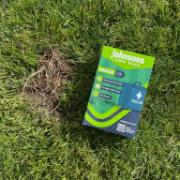
Mixture Breakdown
| Grass Species |
Mixture Percentage |
| Amenity Tetraploid Perennial Ryegrass |
50% |
| NPK 7-7-7 |
50% |
All grass varieties used in Johnsons mixtures are premium amenity quality, chosen for their proven performance in UK lawns. While specific cultivars (individual named strains within a species) may occasionally vary depending on seed availability from season to season, we will only substitute cultivars with others that offer the same high level of performance.
Amenity Tetraploid Perennial Ryegrass
Tetraploid perennial ryegrass represents a significant advancement in amenity turf breeding, offering enhanced stress tolerance, rapid establishment, and exceptional resilience. Developed through selective breeding programmes such as those pioneered by DLF, tetraploid cultivars carry double the chromosome number of traditional diploid ryegrasses, resulting in a range of performance benefits ideally suited to modern lawn and landscape demands.
Tetraploid perennial ryegrasses are used selectively within Johnsons Lawn Seed mixtures to:
-
Improve durability and recovery rate
-
Enhance drought and wear tolerance
-
Support rapid establishment in new lawns and overseeding applications
-
Maintain consistent turf quality under variable conditions
These cultivars are fully amenity-grade and subject to rigorous quality assessment by the STRI.
Suitable for repairs to existing lawns
Apply between March & October, when soil is warm above 10°C and grass is actively growing. For best results, apply straight after mowing and remove clippings to ensure excellent seed-to-soil contact.
How much to use
Use a rate of 35g per m2 fo a new lawn and 20g per m2 for overseeding an existing lawn.
Handy guide: one average handful is approx 32g
How to sow
How to overseed an existing lawn
How to repair a patch
Lawn after care
- Immediately after sowing: Water throughly to settle the seed into the soil
- During the first 2 weeks: Keep the area consistently moist to support strong germination and avoid heavy traffic while grass establishes (this includes pets)
- Weeks 1 to 2: Once the grass reaches around 5-8cm, you can mow for the first time. Keep the mower blades high for early cuts.
- Weeks 3 to 4: Gradully return to your normal mowing height and routine as the grass strengthens.
- Ongoing: Reapply or overseed worn areas seasonally, this is to maintain lawn thickeness.